It is known that the circadian clock in Drosophila can be sensitive to static magnetic fields (MFs). Man-made radiofrequency (RF) electromagnetic fields have been shown to have effects on animal orientation responses at remarkably weak intensities in the nanotesla range. Here, we tested if weak broadband RF fields also affect the circadian rhythm of the German cockroach (Blatella
Similar Posts
Bioactive Excreted/Secreted Products of Entomopathogenic Nematode Heterorhabditis bacteriophora Inhibit the Phenoloxidase Activity during the Infection
Insects 2020, 11(6), 353; https://doi.org/10.3390/insects11060353 ABSTRACT: Entomopathogenic nematodes (EPNs) are efficient insect parasites, that are... Read More
Activity of Smurf2 Ubiquitin Ligase Is Regulated by the Wnt Pathway Protein Dishevelled
Cells 2020, 9(5), 1147. ABSTRACT Wnt and BMP signaling pathways are two key molecular machineries... Read More
1H NMR Profiling of Honey Bee Bodies Revealed Metabolic Differences between Summer and Winter Bees
Abstract: In temperate climates, honey bee workers of the species Apis mellifera have different lifespans... Read More
Spatiotemporal monitoring of hard tissue development reveals unknown features of tooth and bone development
Abstract: Mineralized tissues, such as bones or teeth, are essential structures of all vertebrates. They... Read More
Protease Associated Domain of RNF43 Is Not Necessary for the Suppression of Wnt/β-catenin Signaling in Human Cells
Another paper out and another step closer to a better understanding of #RNF43 tumor #suppressor... Read More
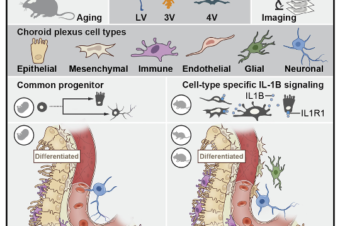
A cellular and spatial map of the choroid plexus across brain ventricles and ages
Abstract: The choroid plexus (ChP) in each brain ventricle produces cerebrospinal fluid (CSF) and forms... Read More